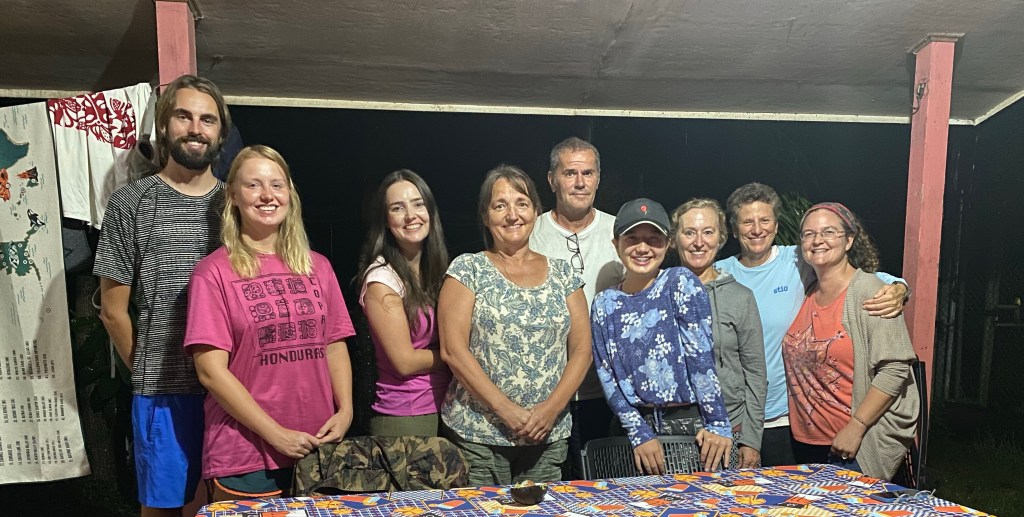
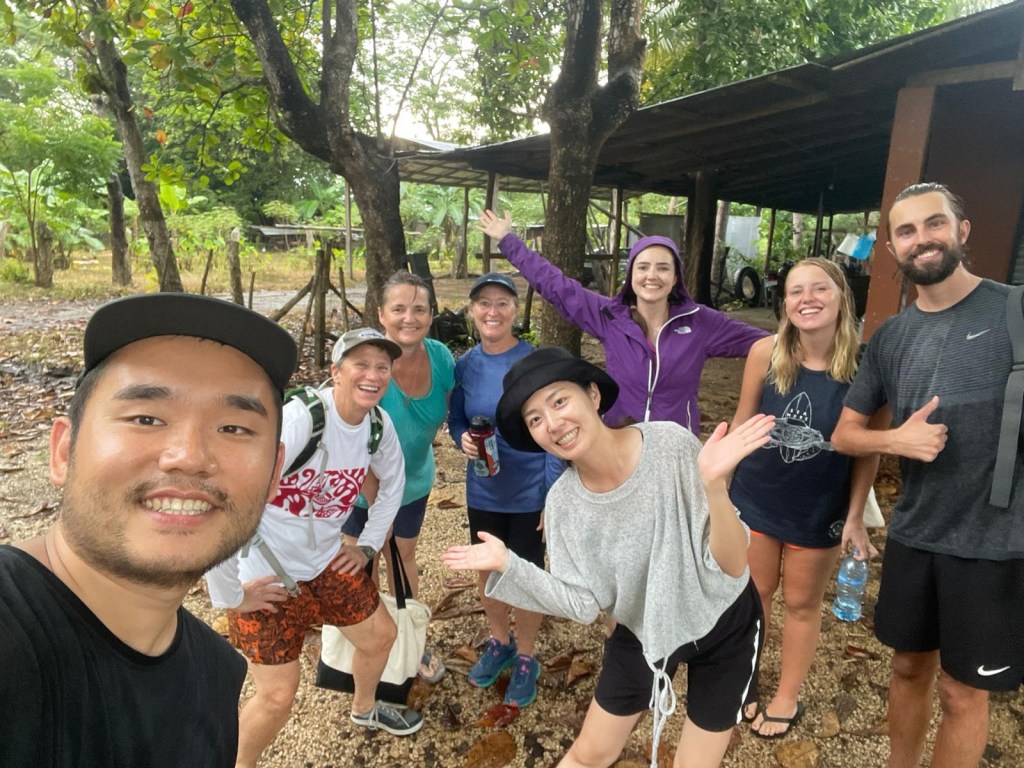
The group of volunteers to help Verdiazul this week (shown below) came from 5 different countries with a united purpose: to help more sea turtles get to the ocean.
I’m incredibly impressed by hatchling turtles. They have the unique ability to know when to emerge from the nest, how to emerge, where to go, and then how to get back to the same beach for nesting many years later.
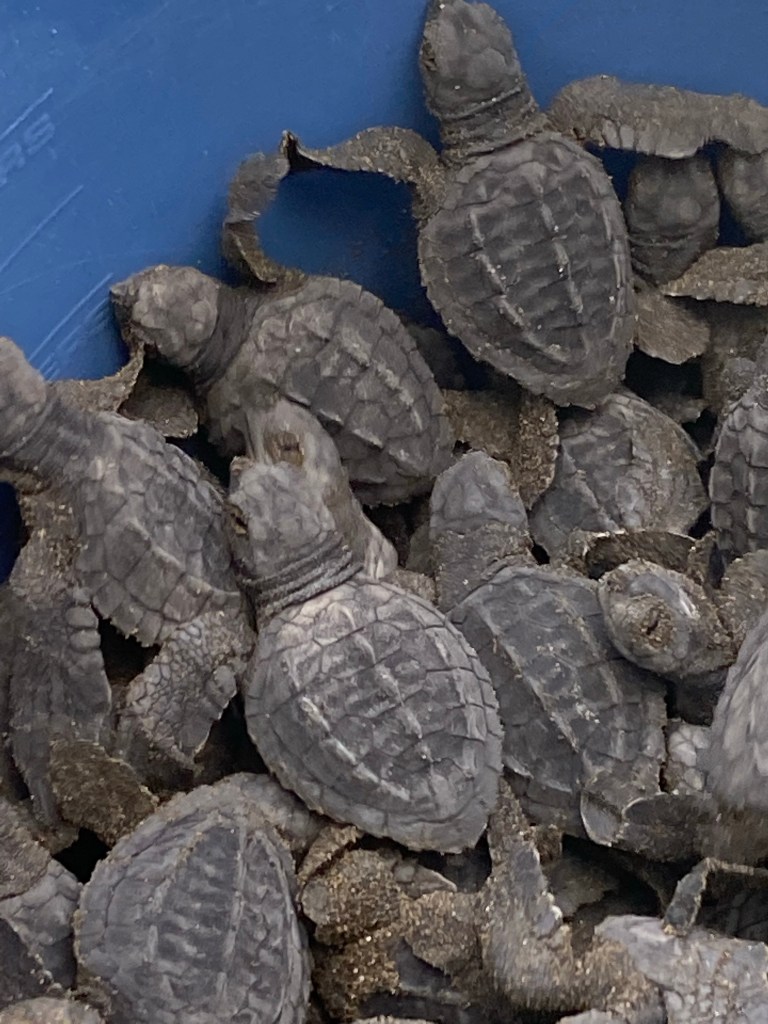
The eggs sit in the nest for around 50 days before they hatch. Then the baby turtles stay in the nest up to 10 days more, waiting for the right moment to come out. This allows for enough time for everyone to be fully out of the shells. If one turtle tries to get out by itself, it’s too much work to get the sand out of the way. And when one gets left behind, again, there’s too much digging for one little turtle alone.
But when they work together, amazing things happen!
They start out sleepy, but once one is active, it has the power to activate all the rest. They all climb on top of one another, which allows the sand to fall below them as they get toward the surface.
At Verdiazul, we take the turtles in a bucket from the hatchery to the site of their original nest.
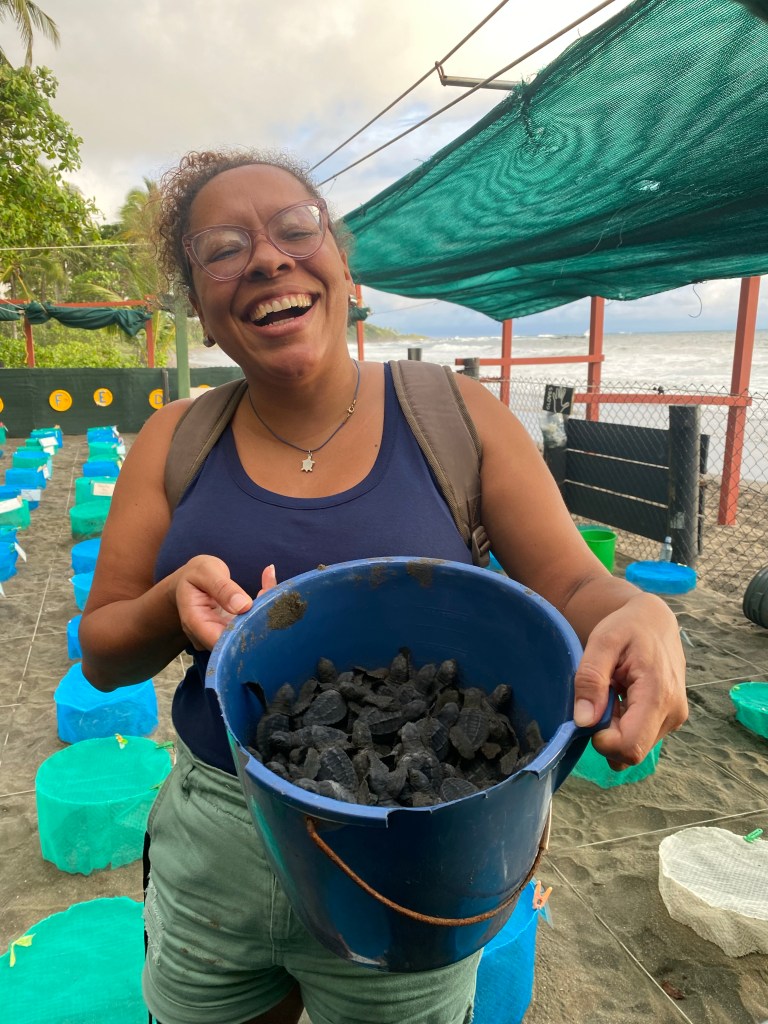
Then the little cuties make their first journey from the nesting area down to the water. It’s important for them to make the journey together. The light reflecting from the ocean is a big clue of where to go, but helps to have all your siblings to follow, too. There is strength in numbers. Since this is a time so vulnerable to predation, every release from Verdiazul ensures every viable hatchling makes it to the ocean.
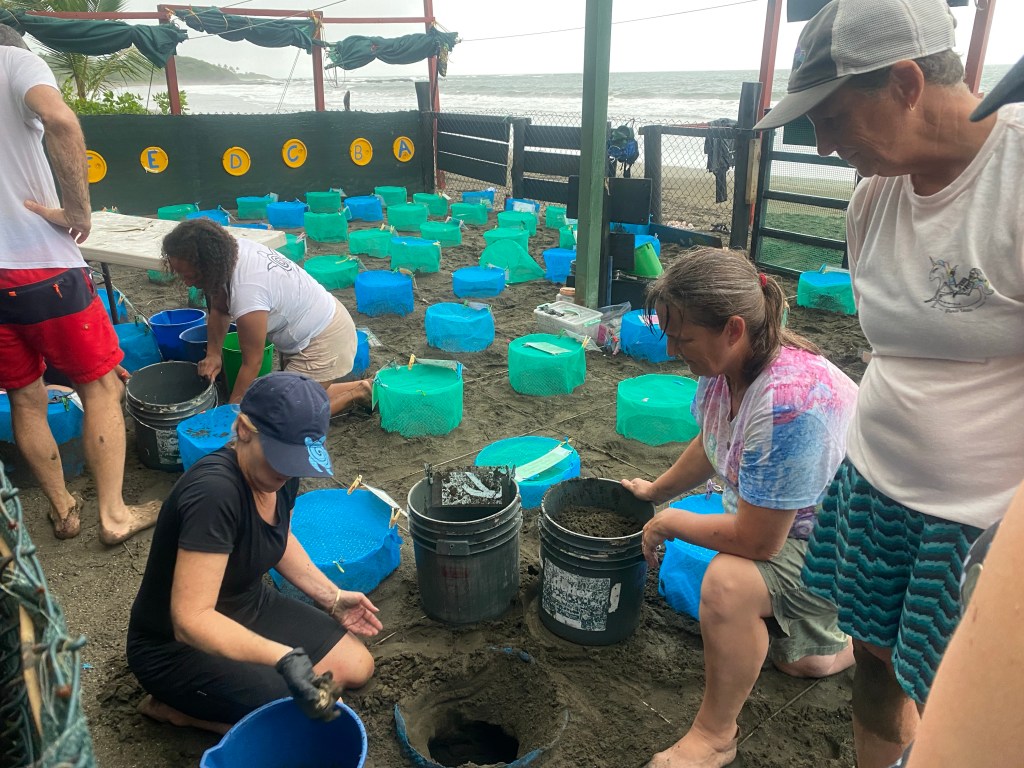
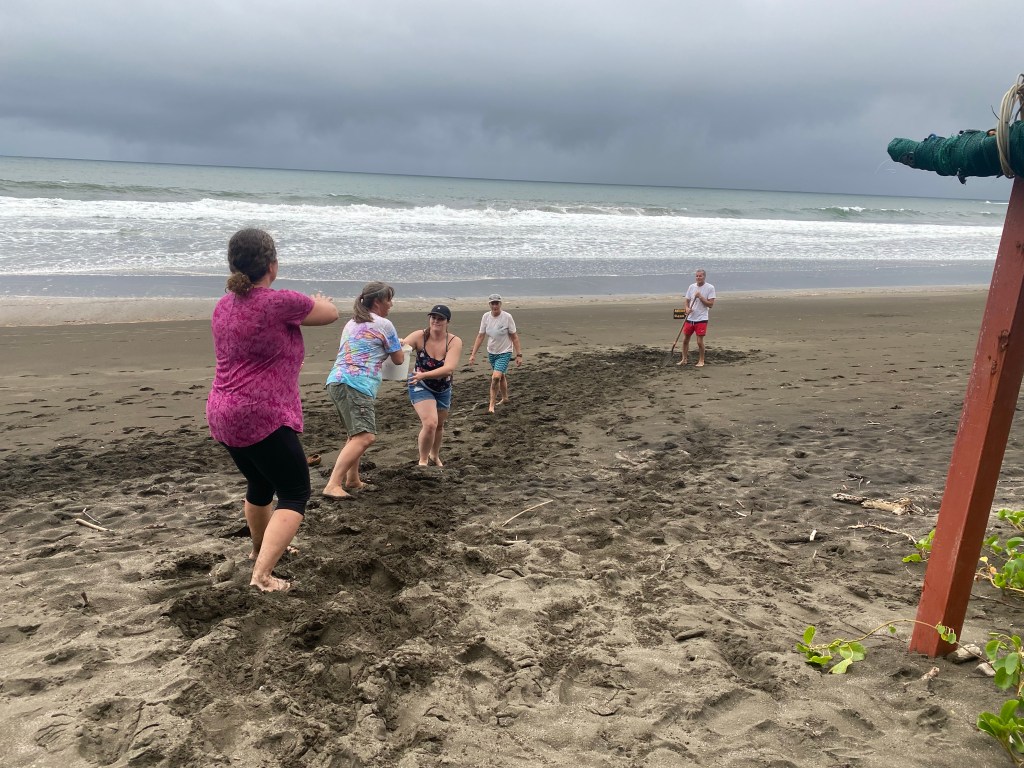
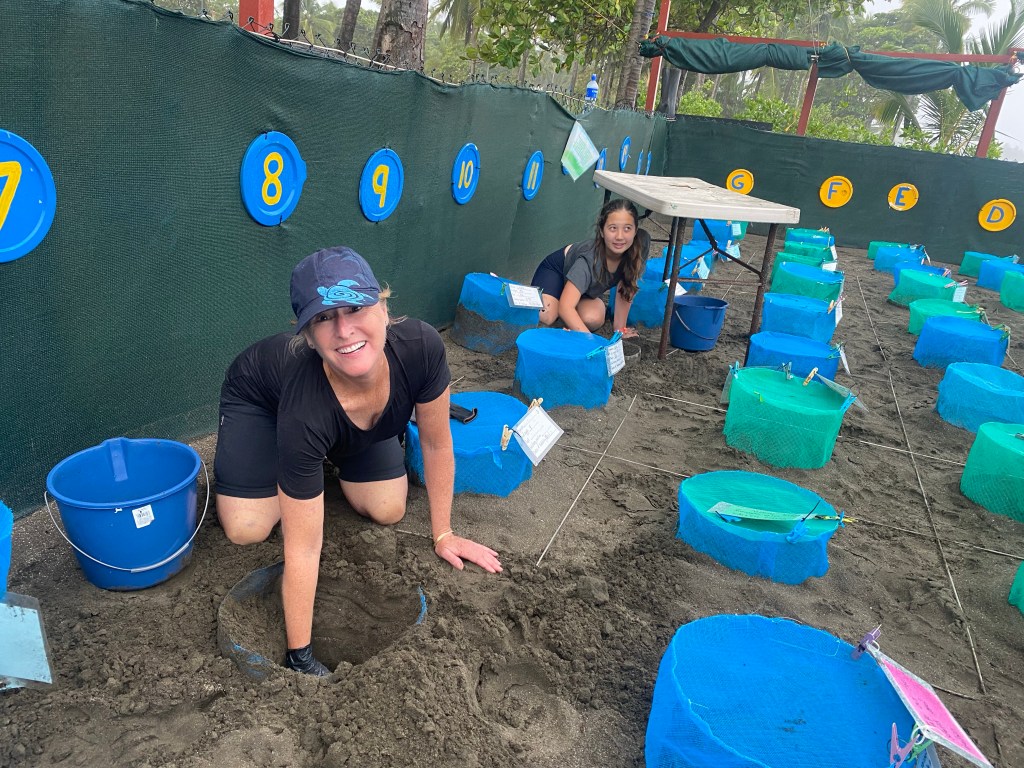
While we’ve been here, we’ve seen the picture of teamwork beautifully painted by the volunteers who have come together to support Verdiazul. When we cleaned all the sand out of it hatchery nest together, it took many buckets, but “many hands made light the load.”
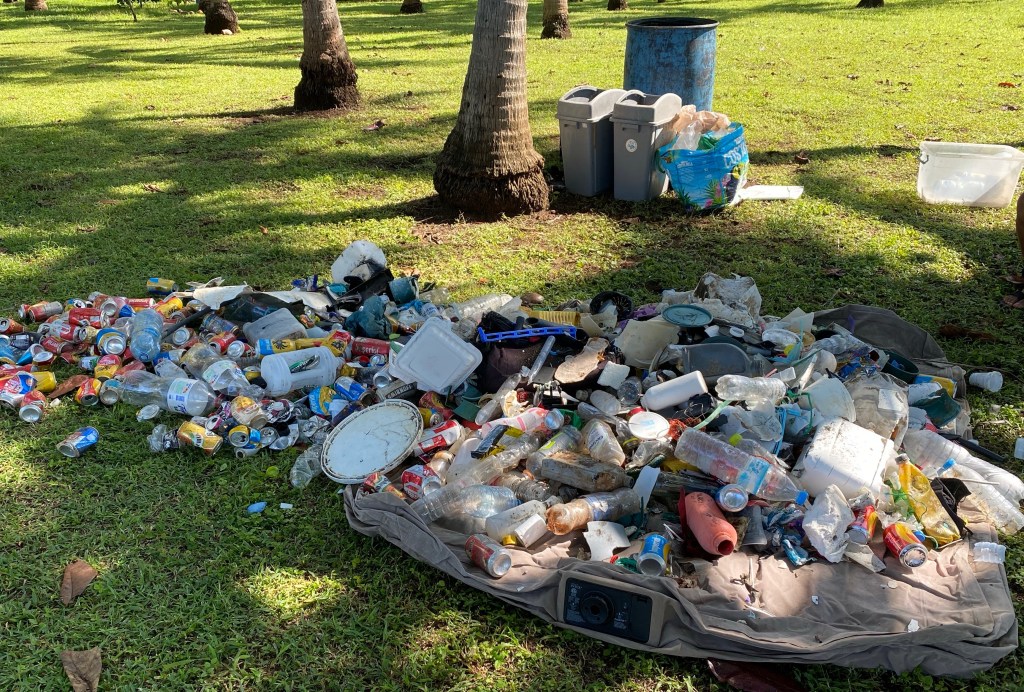
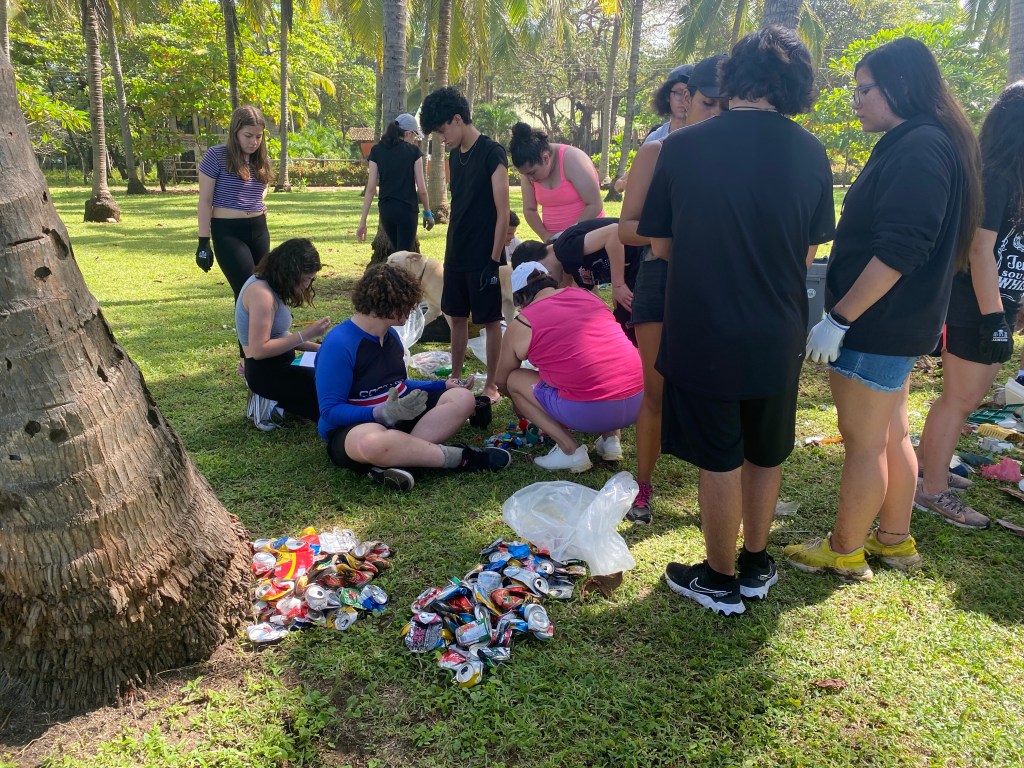
Likewise, when there was a giant heap of trash that volunteers had cleaned up from the beach, an animated team of students together sorted the trash and recyclables so that the least amount went into the landfill.
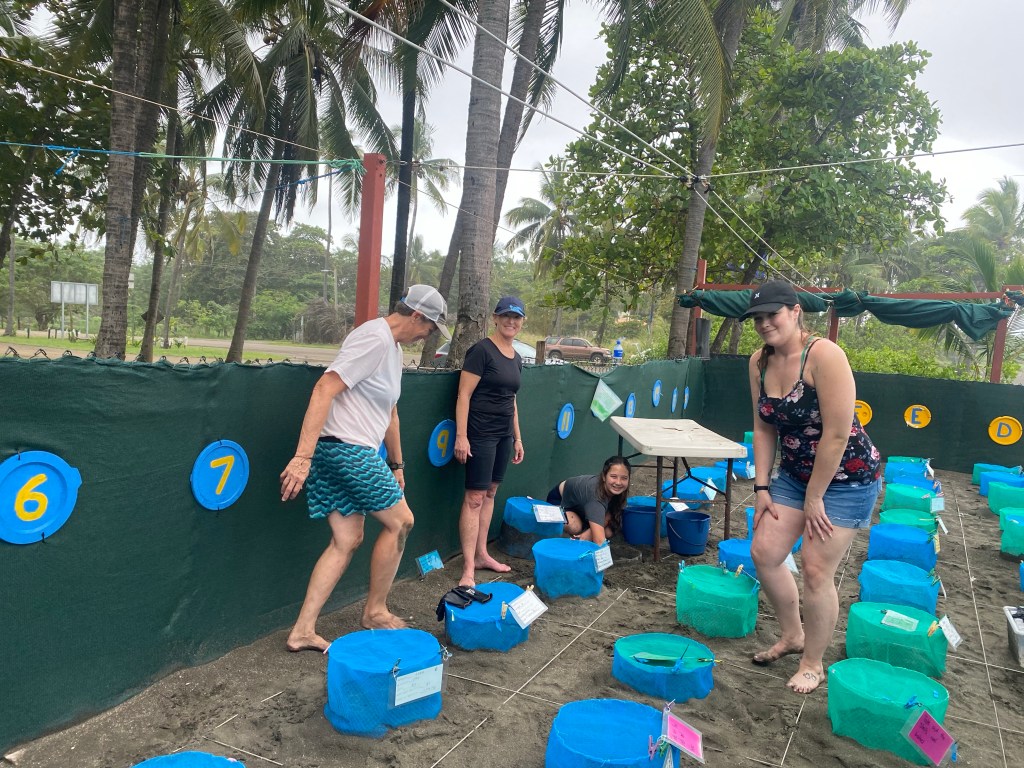
There are many phases to protecting just one nest of eggs:
- find the nest that needs protection,
- put the eggs into a protective hatchery nest,
- guarding the nests,
- release the hatchlings when they hatch,
- cleaning out the shells,
- changing out the sand, so it is ready for the next batch of eggs.
With many volunteers, we had many of these activities happening at the same time.


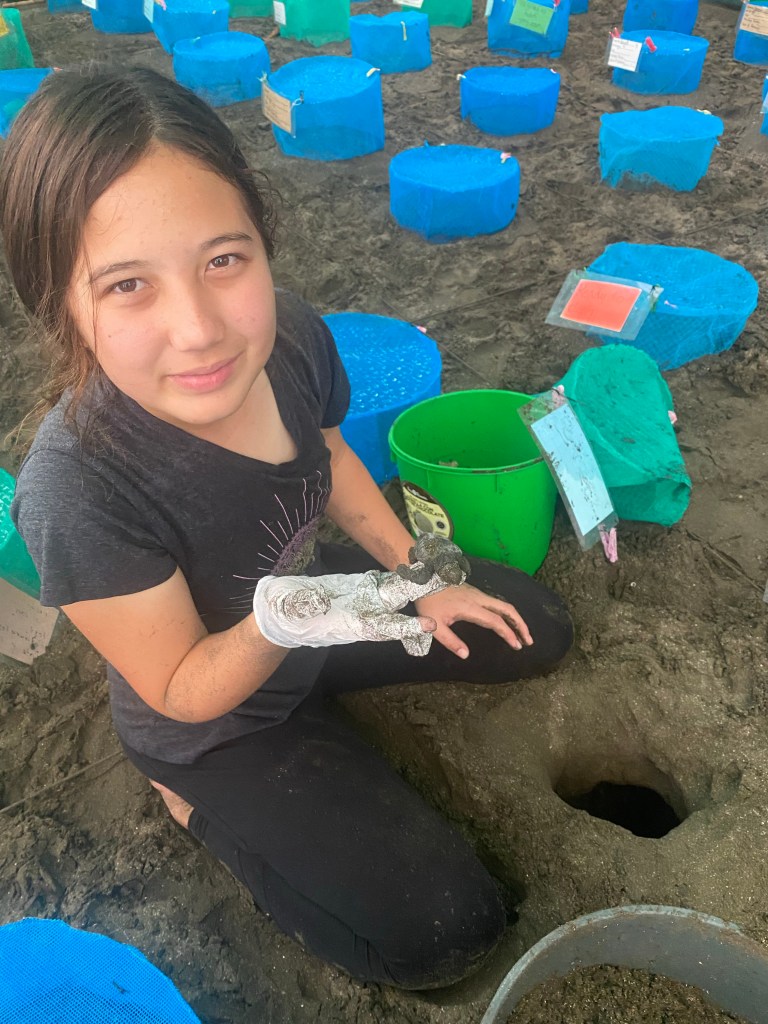
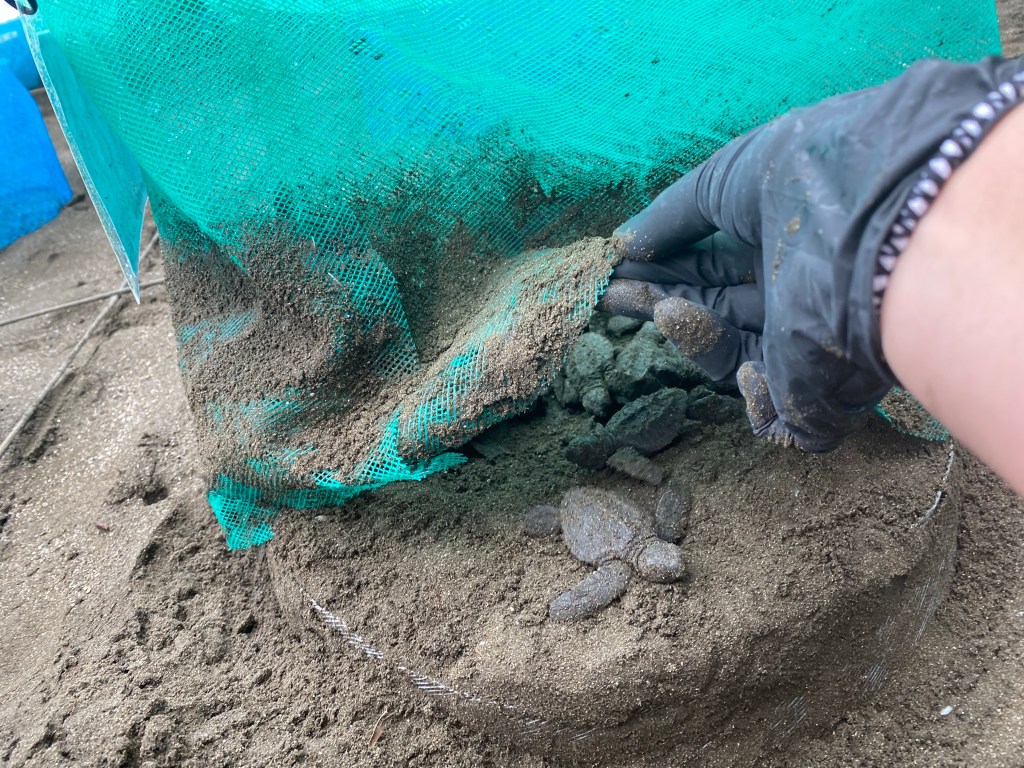
Finally, after nesting work was done, it was time for a release.
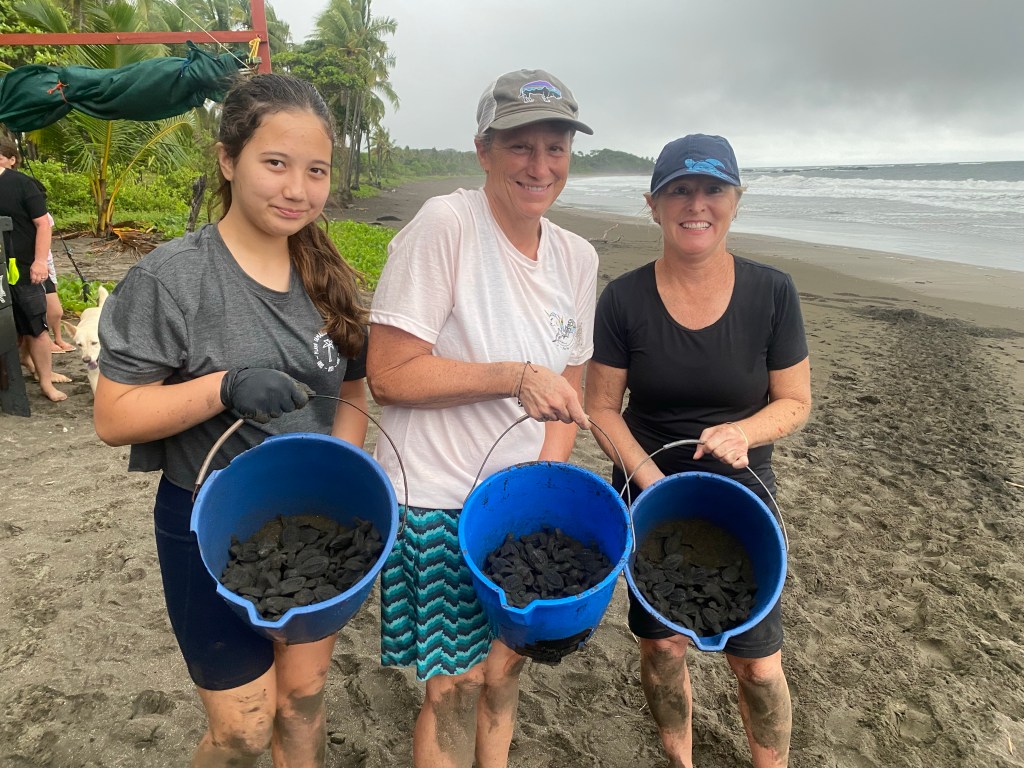

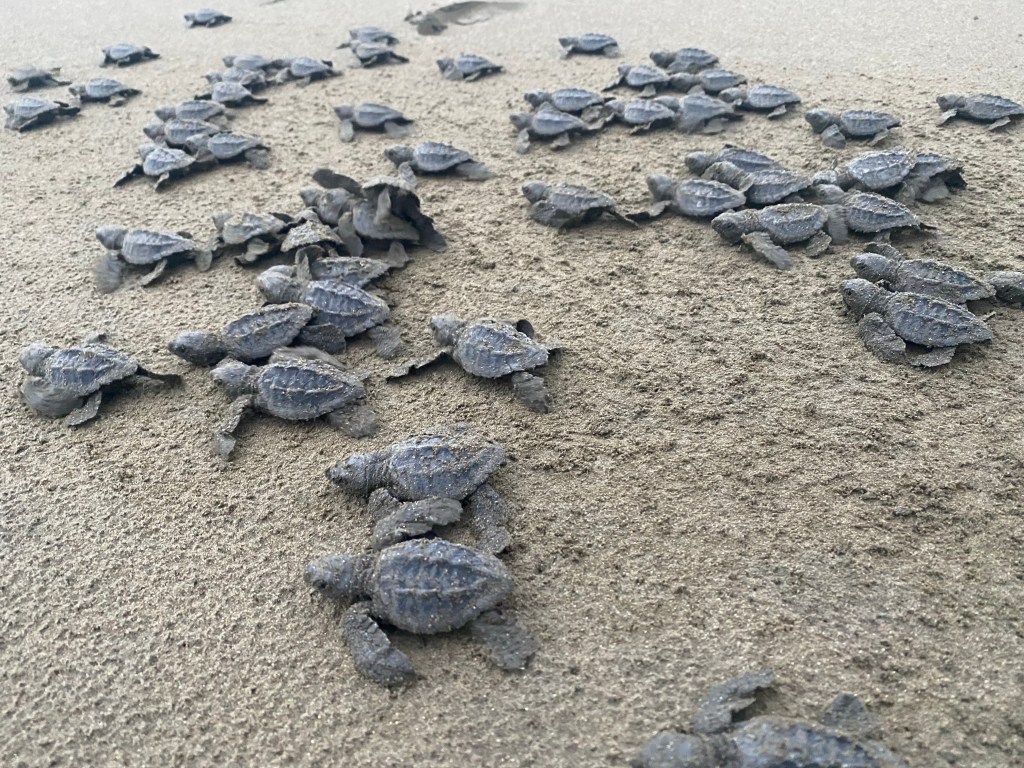
All these little guys are still crawling over each other, practicing the use of their flippers as they make their way to the ocean.
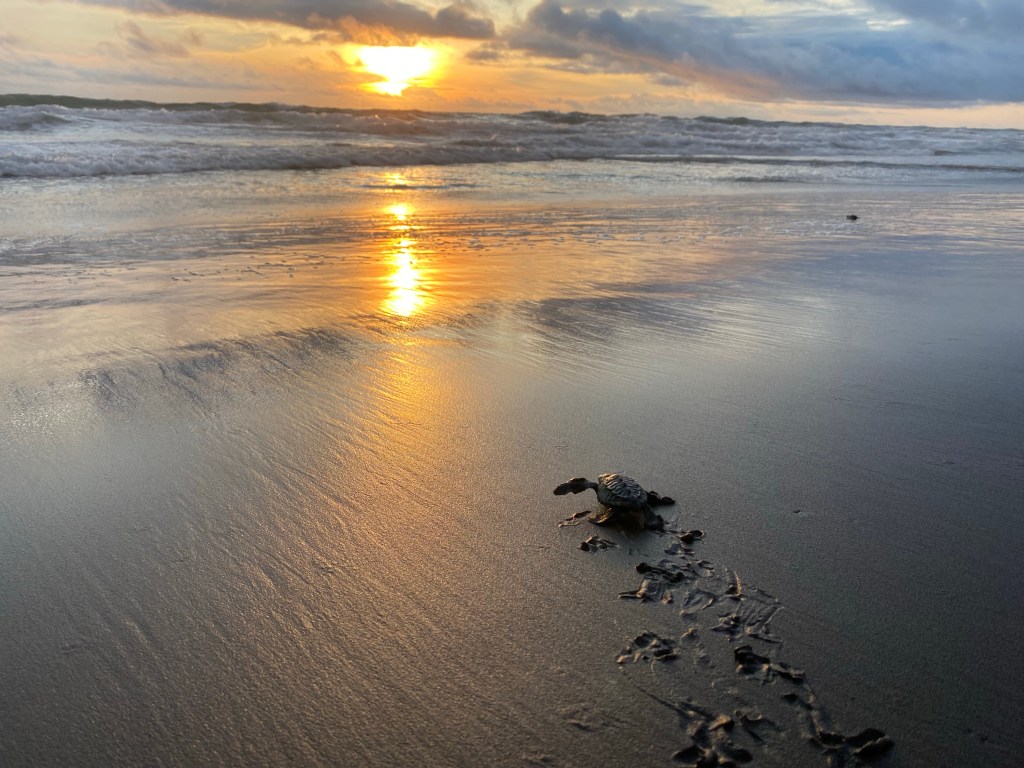
Someday, we too may come back to the same beach. As has been said before:
You can shake the sand from your shoes, but it never leaves your soul.
Anonymous
 Cheerful Nomad