It’s been an awesome night. I was hoping we may see all the phases of see turtle life they can be seen from the land. Last night, I got the bonus of helping a turtle that truly needed it.
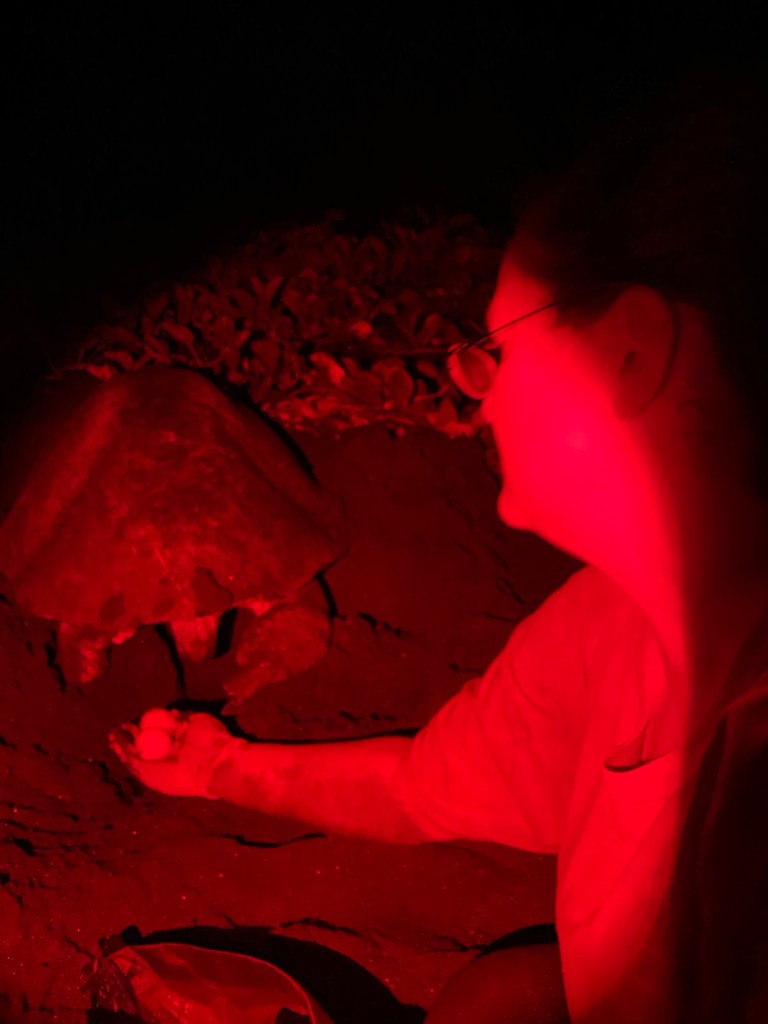
At Verdiazul, they nightly collect sea turtle eggs to bring them to a protective hatchery. Abbie and I were on night patrol last night and we came across this Olive Ridley mama with a deformed hind flipper, trying to build a nest. This video shows how necessary these are for nesting.
Try as she may, she had a nest failure before we found her, and we witnessed the second nest failure. The left hind flipper was causing a second hole that made the nest colapse. But this is a persistent mama, and she tried again. After watching exactly how her movements were coordinated, I pushed sand under her left flipper when she lifted it, so that her sand support could stay symmetrical. Never touch a nesting turtle, by the way.
This Olive Ridley never made a proper nest, but she did her best. It was so shallow that it was easy to move her eggs as she was laying them. We took them to the protected hatchery, where they will spend the next 50+ days.
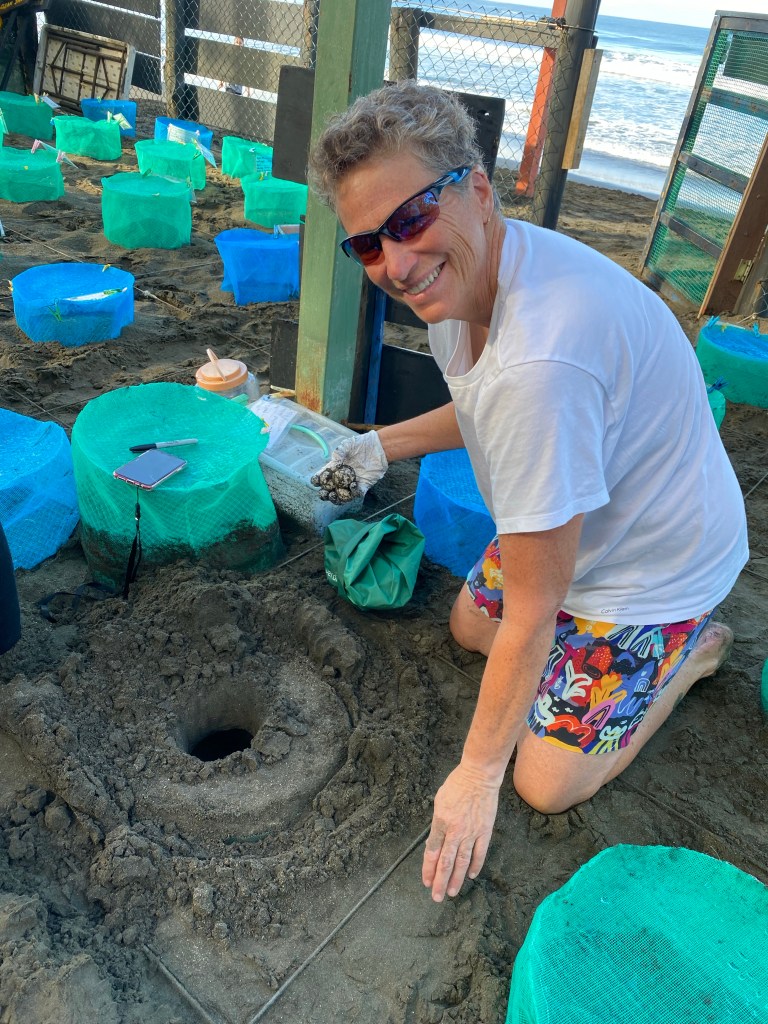
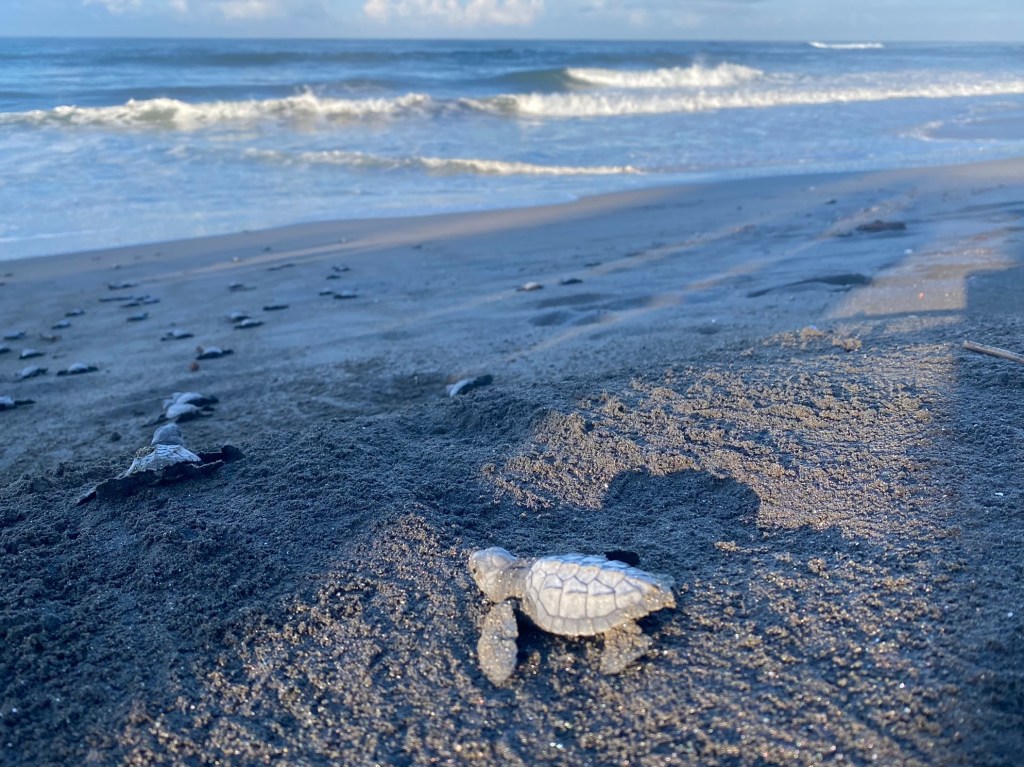
The first danger turtles face is predation, first as eggs, then as they make the important journey to the sea as hatchlings. Humans, raccoons, dogs, birds, and others are interested in this food source. Sea turtles numbers had been declining for many years. (population rates are variable for each species). Of all the reasons for decline, we can have the most direct impact on preventing predation. At least at this beach, Playa Junquillal, the success rate of hatchlings has increased over the past 17 years because of the work of Verdiazul.
If you see tracks like the ones below in an area that has a protection program, contact them to report it. Sea turtle protection exists in many areas. Some document and research turtle activity, many mark the nests to stop them from being trampled, and some move the eggs for direct protection of individual nests.
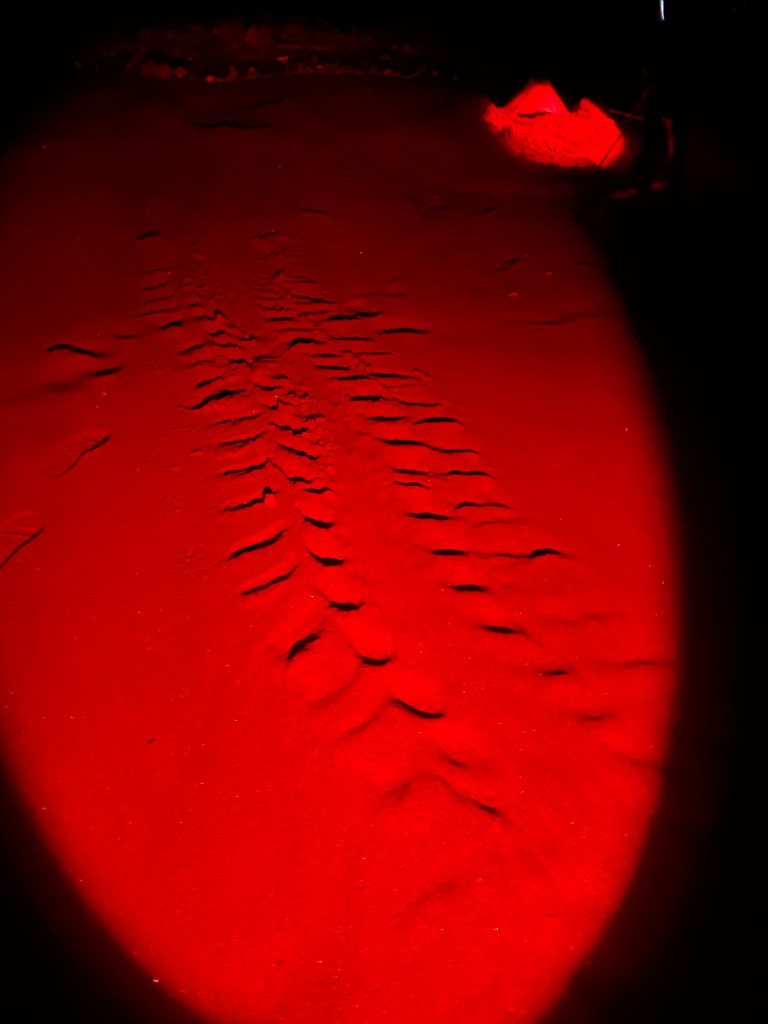
In this case, without the help of Verdiazul’s staff and volunteers, this mama turtle probably would have given up and headed back to the ocean, likely depositing the eggs somewhere with no nest. Or she would have succeeded in a shallow nest, much more likely to have the eggs eaten. Instead, the ocean will see a new around 126 babies entering in a couple months!
 Cheerful Nomad